Flux studios offers short specialist classes and courses in jewellery making at all levels for example, jewellery for families workshop, ring making workshop. Flux Studios About Membership Classes Jewellery News Contact Buy Gallery

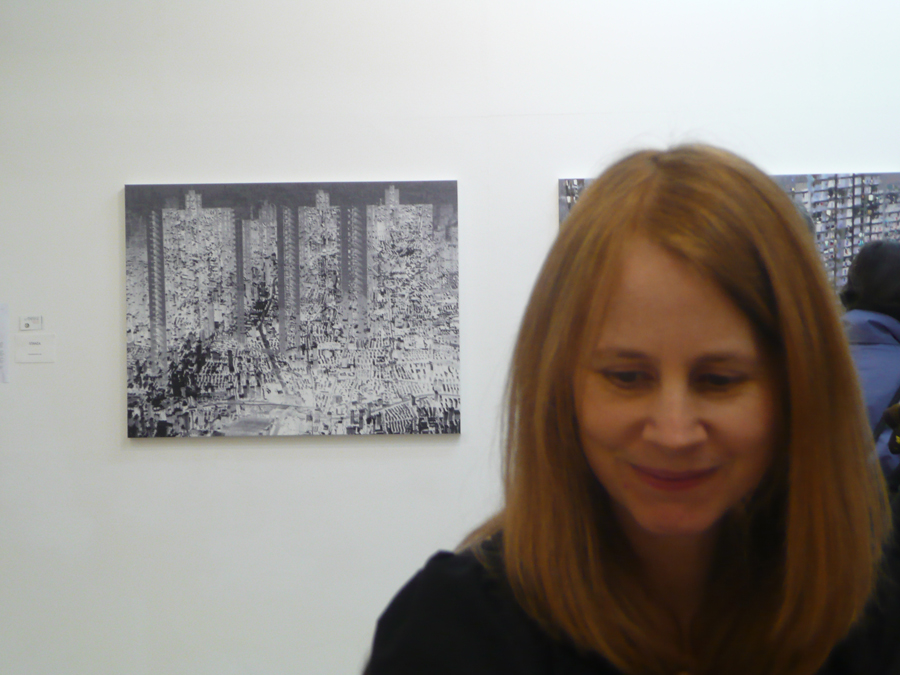
About Vicky Forrester: Director of Flux Studios.
 
Personal History.


I’m a practicing jeweller with 23 years of experience in the contemporary jewellery field. I have exhibited my work extensively in the UK and abroad through various specialist galleries (Electrum, Lesley Craze, Flow, ProArte Monaco etc)

I have a BA Hons degree in Silversmithing and metalwork (Camberwell, 1990), and a Post Graduate Certficate in Education (Goldsmiths’, 1994)

To complement my working practice, for the last 13 years I have been teaching jewellery making to the community in a variety of contexts – through workshops and specialist short courses and at community and further education colleges in London. (Community Education Lewisham, Morley college, Lambeth college, Westminster Adult Education Service)

My work and bespoke jewellery collections is here on my own website www.vicky-forrester.com

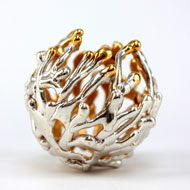
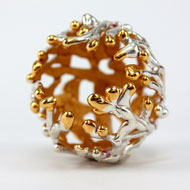
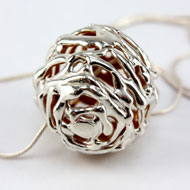
Vicky Forrester woven Jewellery.

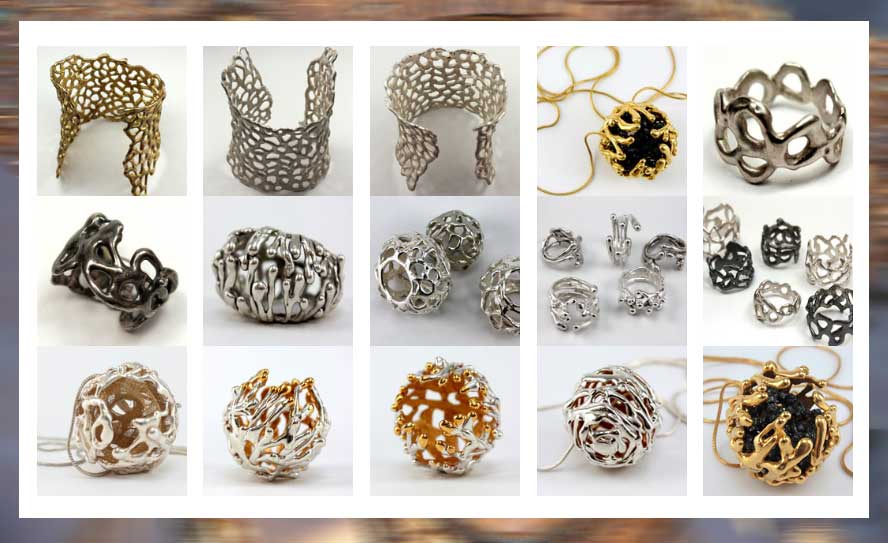
Image shows some of Vicky Forrester personal work. see www.vicky-forrester.com,

I am an ardent supporter of ‘life long learning’.

Having myself gained so much from the generous provision of adult and community education in the 80’s I am conscious of the enormous benefit that this level of education provides. This provision seems elemental to me in the interest of promoting a healthy, respectful and balanced society.
Beyond the immediate value of learning new skills (and the subsequent opportunity to enter full time study and employment), adult and community education also provides opportunities for personal growth that defy measure. Such benefits include: 

  • exploring one’s creativity
  • learning new skills, to develop dexterity
  • enhancing problem solving skills
  • meeting, sharing with and learning from a diverse range of individuals
  • improving self esteem and self confidence
  • communing with one’s self
  • gaining and improving social and communication skills
  • entering into higher education (as in my own case)
  • returning to full time education
  • making beautiful objects
  • presenting works to a wide audience in exhibitions
  • selling work
  • becoming a successful designer maker
  • changing career within the jewellery sector


As an ‘eternal student’, I continue to seek new experiences, explore new skills, and each year I endeavour to enrol on a different course. My life is richer for these experiences, and along the way I have met some inspirational people.


My Teaching

I have a wide range of teaching experiences in a variety of contexts across the educational sectors, (nursery / primary / secondary / community / further education). These experiences have equipped me to work effectively with students having a broad range of skills, abilities and needs, with absolute respect for the individual regardless of age, race, sex, ability or religion.

Every student comes with their own wealth of experience and knowledge and I actively encourage the sharing of these resources for the enrichment of all.

I particularly enjoy working with adults, and I have 11 years of experience in the community and further education sector. As well as teaching mixed ability unaccredited courses, I am familiar with various accreditation procedures having devised, prepared and presented courses that satisfy specified frameworks (LOCN and NCFE), and my courses have received extremely positive feedback from these awarding bodies

Because of the way in which colleges have been funded, there has been a huge push for courses to become accredited in some form, and this has led to enormous amounts of paperwork for students to complete.

The courses currently on offer are not funded by another body; neither are they accredited and so I am pleased to be able to offer jewellery courses which do not require of my students the completion of unnecessary paperwork. While I actively encourage the use of a sketchbook for personal development, students can choose how much time they focus on this work, also how and what they wish to learn. This also leaves me free to facilitate on an individual basis. In effect the course is tailored to the needs of the individual rather than those of a distant funding body with an entirely unrelated agenda!

All courses I teach are supported with relevant handouts that I also devise and write. My students say they are informative and useful!

I encourage students to keep abreast of the contemporary jewellery movement and each term an extra - curricular visit to an exhibition will be arranged for interested parties to attend.

I also keep students abreast of related exhibitions throughout the year, sending details through an email list, which I set up annually. Students wishing to take advantage of this facility should provide me with an email address.


My Work

Jewellery for me is an art form; I see jewellery as wearable sculpture, a means to explore relationships and form, to ask questions and present challenges, to soothe the senses or to awaken them.

From concept to realisation, I like the element of problem solving that jewellery making presents. For this reason I mainly produce one-off pieces, and I also like to work to commission.

The making process requires focus; at every stage in the development of a piece of jewellery, challenges arise and choices must be made. The process requires a fluid approach, and every problem arising equally presents opportunity. The final outcome charts this evolving relationship between the idea, the choices made, the application of process, and the behaviour of the material. With a successful piece of jewellery these elements find accord.

Equally important to me in the making process is the notion of intent. As we weave and forge and form our intentions into objects, here we jewellers have the means to exercise alchemy.

My motivation for instigating Flux Studios


The decision to create FLUX STUDIOS  has evolved in response to 3 well documented gaps in the progression routes for the creative industries generally, with particular focus on the  jewellery industry.

1.  There has been little or no support for graduates to become established in their practice on leaving college (creative entrepeneurship) 
2.   The traditional training routes for adults entering or returning to the creative fields have been, and continue to be massively eroded
3.  Few young people are entering the jewellery field, at a time where the sector has identified an ageing /reducing workforce

In setting up Flux Studios I see an opportunity to make a big change in the way that the jewellery industry can be supported.

An additional influence in this plan has been in the desire to instigate social cohesion through group activity, using jewellerymaking as a vehicle towards this end. Grass roots provision, once abundant and accessible, has traditionally fulfilled this role. Through Flux Studios this provision can be re-established.

I have consulted the following documents in the development of my business :

  • Jewellery Sector Investment Plan – 2005 the Goldsmiths’ Company, LDA, City Fringe Partnership, LB of Camden
  • Making it in the 21st century – a socio-economic survey of craft activity in England and Wales, 2002-03  the Crafts Council
  • Making the case for Public Investment: A summary of recommendations- Developing Entrepreneurship for the Creative Industries - Department for Culture, Media and Sport may 2006
  •  The Role of Higher and Further Education: Developing Entrepreneurship for the Creative Industries - Department for Culture, Media and Sport may 2006
  • Creative Britain: New Talents for the New Economy -  DCMS 2008


The case for graduate support into self-employment:
An issue identified in the JSIP report as that while the jewellery manufacturing industry in the UK  is worth a massive  £495 million * annually, the nature of this market is shifting; In order to keep it’s market lead the UK must harvest the design skills, originality and innovations that the graduate market has to offer. *fig for 1999

There are 5 major art colleges in London providing courses in jewellerymaking at degree level or above. There are at least 100 new jewellers graduating from these courses, year on year. There is little available in the way of monitoring with regard to their subsequent employment history, but the number of graduates entering the jewellery trade through traditional pathways is thought to be very small. The most common route for graduate jewellers is through self -employment as designer makers; their impact is not so well documented.

Having experience as a graduate moving into self employment I am aware of the many difficulties one has to negotiate in the successful transition to designer-maker.

Obstacles include financial restriction, difficulty in finding and equipping affordable studio space, loss of tutor mentoring/ peer support; skills and knowledge limitations, little knowledge or connection with manufacturers and a lack of business skills.

Graduates are needed to stimulate the jewellery sector to keep British design at the cutting edge.

The JSIP report has stimulated a range of new initiatives aiming to bring about positive change, in a variety of ways:

Business advice, connections with manufacturers, apprenticeship schemes, specialist courses, access to specialist equipment, and business support packages including workshop access for a few of the very best graduates, etc.

Key activists include the Goldsmiths Co, Holts Academy, ChangeActShare, Newham College, Craft Central, Cockpit Arts, Benchpeg, Goldworks.

But on the larger scale access to affordable jewellery space remains hard to find.
Subsequently those just starting out find it hard to break in to the work cycle. Supply outstrips demand for affordable workspaces; there are always waiting lists for studios with providers such as Craft Central. Cockpit Arts offers studio space on a selection basis, preferring to take those with an established business track record.

The cost of setting up a workshop, once a studio has been found, can be prohibitive for graduates who already carry debts from their years at college.

Having invested anywhere between 4 and 6 years of their focus, their time and money in the pursuance of a career in jewellery, many find this financial hurdle too difficult to surpass.

Consequently the number of graduates moving into the sector is small, and the jewellery sector is not benefiting from their well- honed creative skills.

In order for them to impact the market there needs to be in place affordable access to an equipped workshop, on flexible terms, where they can also access support for their work and their plans.


The case for adult and community education:
Life long learning is well recognised to provide solid foundations for personal and community wellbeing.

We as a nation are prized for our creativity, but at every turn funding for adult and community education in the arts is being eroded.

Since the LSC’s decision to withdraw support for part time accredited courses aimed at the adult population, more and more colleges have withdrawn support for adult and community courses in creative subjects. Existing jewellery courses are closing down.

And yet there exists an enormous demand for access to courses and workshops in jewellery making.

Students attending evening courses vie for places at the few remaining London colleges that provide such services.

Access to weekend workshop usage is unobtainable.
Availability of weekend courses is limited.
Many of the courses that do exist run during the weekdays, and are beyond the range of affordability, especially when in order to attend time off work must also be negotiated.

Adults in the low-income bracket have little opportunity to enter the field.

There is demand without service in this field.


The Solution - Flux Studios


The studio provides affordable opportunities for graduates, interested adults and the local community to explore and develop jewellerymaking skills.

The studio provides a stepping - stone for recent graduates in jewellery to enter the field at an affordable price, in a supported environment.

The studio also provides an exciting creative environment for the wider community to learn how to make jewellery through a variety of competitively priced classes.

The provision of continuity of learning and opportunities to progress are integral to the business as those attending classes become sufficiently competent to become members and thus explore their business potential.


The Benefits:

Raising the bar: More graduates stay in the field, thus raising the standards for innovative design.
Supporting creative entrepeneurship: Experienced individuals who want to explore the potential for a career change into the field have the opportunity to do so in a supported environment.
Educating the next generation of jewellerymakers and designers: The demand is met for the local community wishing to explore their creativity through jewellerymaking.
Inspiration: The community users have an opportunity to work alongside inspirational new professionals.
Educating the public - design appreciation: The local community (and a widening network) is introduced to the concept of designer jewellery; there is an opportunity to appreciate and purchase well - crafted and original jewellery by local makers
Financial return: Graduates become successful makers. Graduates support UK manufacturing. New students purchase materials, tools and publications from Hatton Garden. Students attend exhibitions, events and specialist workshops in jewellery. Students purchase the work of others. Students move into full time education.  Students become makers. Makers generate income…..

Flux Studios

Image copyright Vicky Forrester. (c)

www.vicky-forrester.com